How to Compare DEWA and District Cooling Costs in Dubai Apartments
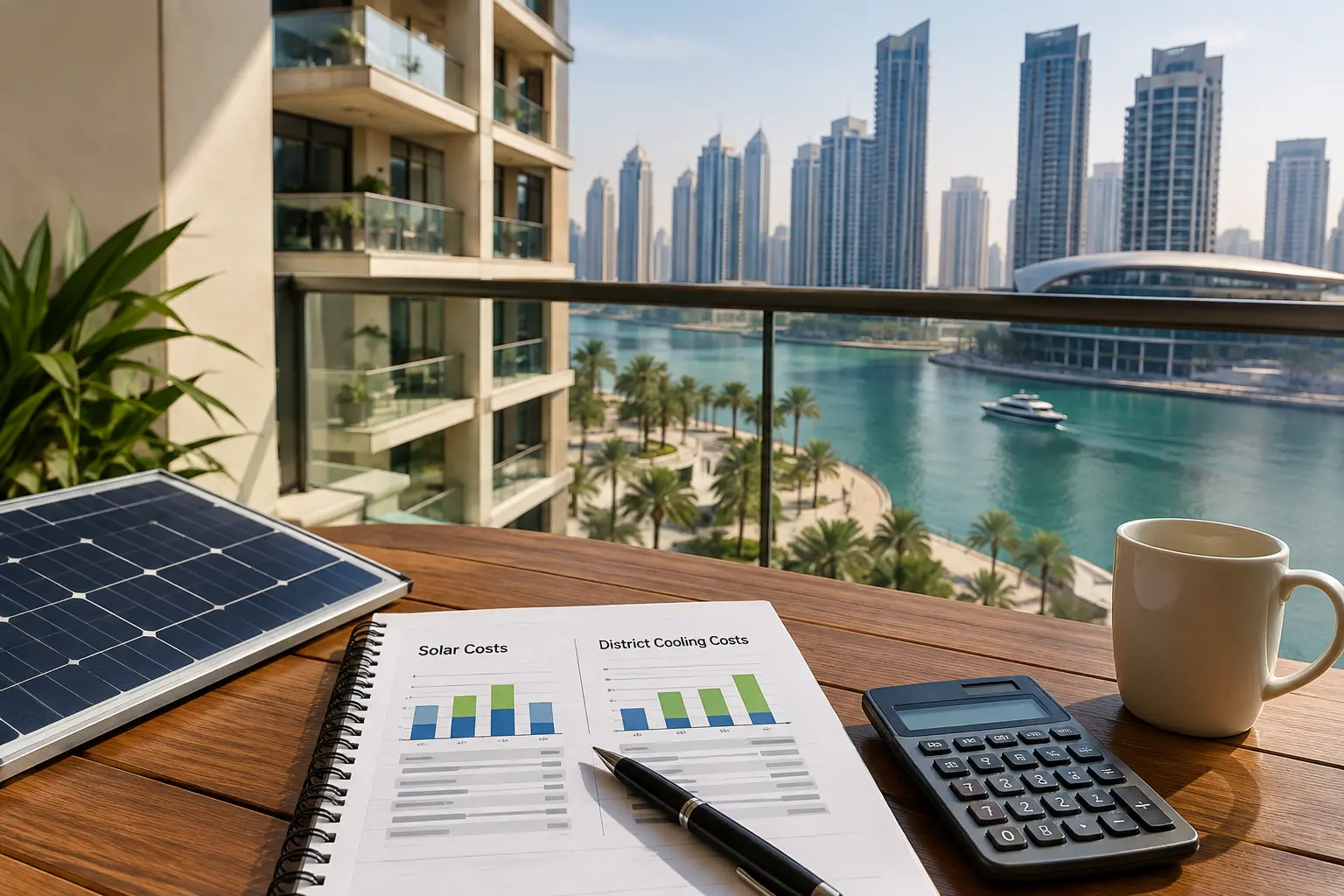
When comparing Dubai apartments, rent is only one part of the monthly cost. Utilities can materially change your budget, especially when one building uses conventional air conditioning while another relies on district cooling. Understanding how to compare DEWA and district cooling costs in Dubai apartments helps tenants, buyers and investors estimate a more realistic cost of living.
The key is to separate electricity, water, cooling consumption and fixed charges. A property with a lower advertised rent may not be the cheaper option if it has high cooling fees, a capacity charge or less efficient air conditioning. Before signing a lease or making an offer, request recent bills and confirm exactly which services are included.
What DEWA usually covers
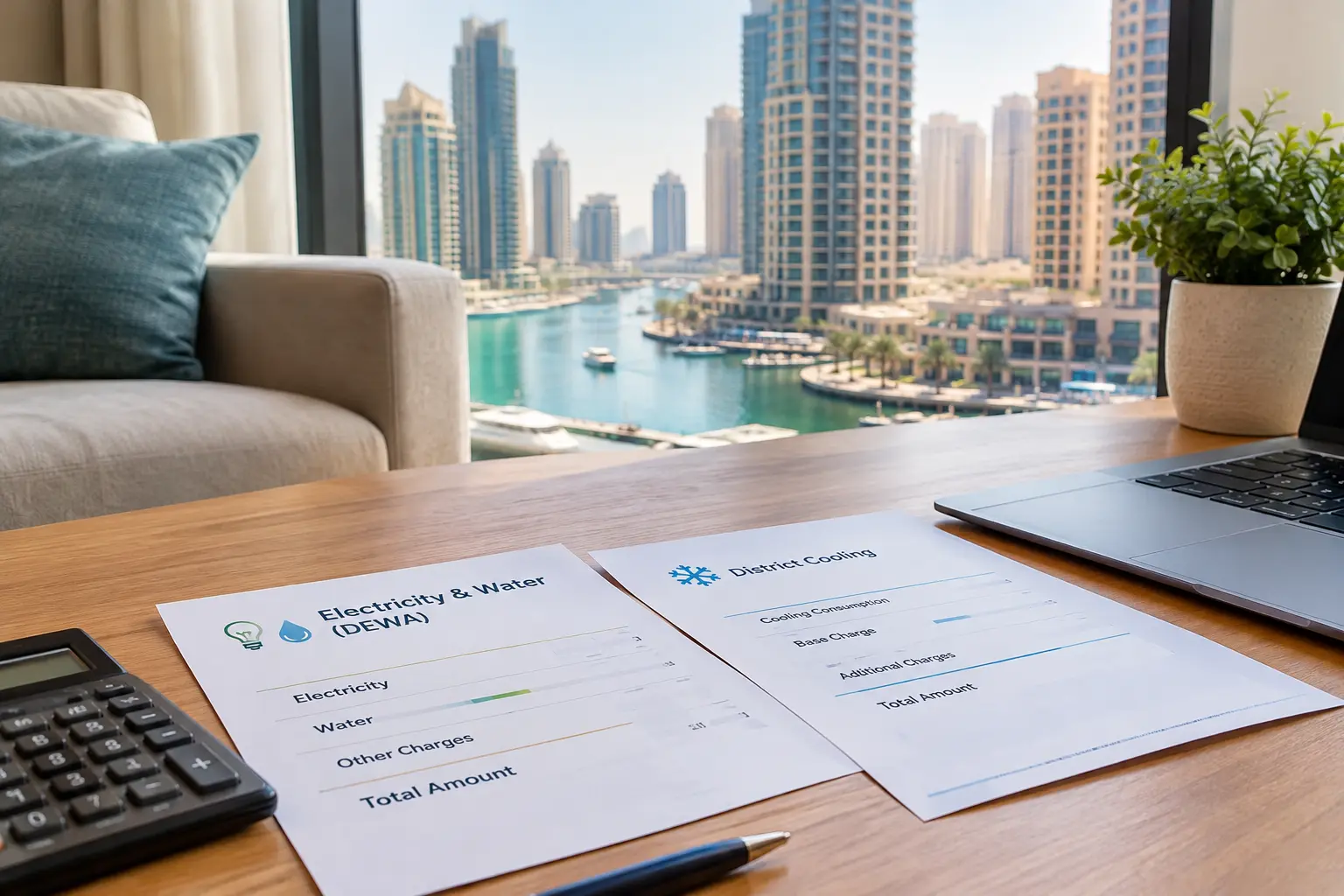
DEWA, the Dubai Electricity and Water Authority, generally bills residents for electricity and water. Electricity is measured in kilowatt-hours, or kWh, while water is measured in cubic metres. Residential electricity is charged using consumption slabs, with published rates of AED 0.230 per kWh for the first 2,000 kWh, AED 0.280 for the next band, AED 0.320 for the following band and AED 0.380 above 6,000 kWh. Residential water is charged at AED 7.700 per cubic metre for the first band, AED 8.800 for the next band and AED 10.120 above that, before applicable surcharges and VAT.
Your DEWA bill may also include meter charges, fuel surcharges, housing-related charges where applicable and other account items. Therefore, comparing only the electricity rate can produce an incomplete estimate. Ask whether air conditioning is connected to the DEWA electricity meter or billed separately by a cooling provider.
How district cooling charges work
District cooling supplies chilled water from a central plant to connected buildings. The apartment is normally billed for the cooling it consumes, measured in refrigeration ton-hours, or RTh. Providers may also apply a capacity or demand charge based on the refrigeration tons allocated to the unit. This fixed charge can apply even when the apartment uses little air conditioning.
Empower explains that its district cooling bills can include a consumption charge of AED 0.568 per refrigeration ton-hour and an annual capacity charge of AED 750 per refrigeration ton, billed monthly according to the allocated capacity. A monthly meter or service fee and 5% VAT may also apply. Actual charges can vary by provider, building, contract and regulatory updates, so use the latest statement for the specific apartment rather than relying only on a general estimate.
This structure makes district cooling different from a standard DEWA-only electricity comparison. With DEWA-powered air conditioning, cooling costs are usually embedded in the apartment's electricity consumption. With district cooling, a portion of the cost may be fixed and separate from ordinary electricity usage.
DEWA versus district cooling: the main differences
| Cost factor | DEWA-based cooling | District cooling |
|---|---|---|
| Primary measurement | Electricity in kWh | Cooling in RTh, plus electricity for other appliances |
| Fixed cooling fee | Usually not a separate cooling capacity fee | May include a monthly capacity or demand charge |
| Variable cost | Electricity consumption by the apartment | Cooling consumption recorded by the cooling meter |
| Billing provider | DEWA | A district cooling provider or building-appointed billing company |
| Best evidence for budgeting | Recent DEWA bills | Recent cooling bills and the unit's allocated capacity |
The most important distinction is not that one system is always cheaper. Efficiency depends on the building, apartment size, insulation, thermostat settings, occupancy, weather, maintenance and tariff structure. A well-managed district cooling system may perform efficiently, but a high fixed capacity fee can still make a lightly occupied apartment expensive.
A practical comparison method
Use the following process when evaluating two apartments:
- Confirm the cooling arrangement. Ask whether the property is chiller-free, connected to district cooling or cooled through individual air-conditioning units powered by DEWA electricity.
- Collect twelve months of bills. Seasonal usage can differ significantly in Dubai. A single mild-month bill may understate summer costs.
- Separate fixed and variable charges. Record capacity fees, meter fees, account fees and any recurring service charges separately from usage-based charges.
- Calculate the annual total. Add twelve months of electricity, water, cooling, fixed fees and applicable taxes. Divide the result by twelve to create a realistic monthly average.
- Adjust for your household. A family working from home may use more cooling and electricity than a resident who spends most days outside. Consider occupancy, floor level, window exposure and preferred indoor temperature.
- Ask about unusual charges. Confirm deposits, activation fees, reconnection charges, late-payment fees and whether cooling bills are paid directly or through the landlord or building manager.
For an area-level comparison, Mena Homes' compare areas tool can help you review locations while considering more than headline rent. Compare transport, amenities, property types and expected household costs together, then verify utilities for the specific building.
Example budget comparison
Imagine two similar one-bedroom apartments. Apartment A uses DEWA electricity for cooling and has an average combined electricity and water bill of AED 650 per month. Apartment B has a district cooling bill averaging AED 250 per month, including consumption and fixed charges, while its separate DEWA electricity and water bill averages AED 450. Apartment A would cost approximately AED 650 for these utilities, while Apartment B would cost approximately AED 700.
This example does not establish a universal result; it demonstrates why all relevant bills must be added together. If Apartment B has a lower rent by more than AED 50 per month, it may still be the better overall financial choice. Conversely, a higher cooling bill can outweigh a small rent discount.
Questions to ask before renting or buying
- Is the apartment chiller-free, and if so, who pays for cooling?
- Which company issues the district cooling bill?
- What is the unit's allocated capacity in refrigeration tons?
- What were the highest and average cooling bills during the previous summer?
- Are service, meter or capacity charges included in the quoted amount?
- Are there separate DEWA electricity and water deposits?
- Does the landlord include any utility allowance in the rent?
- Are unpaid cooling charges linked to the unit or the previous occupant?
Buyers should also review the building's service-charge history and ask whether the cooling infrastructure has required major maintenance. Owners may face different payment arrangements from tenants, particularly where cooling is recovered through building management or included in service charges.
Include utilities in your affordability calculation
Utility costs matter when deciding how much rent or mortgage payment your household can comfortably manage. A useful budget should include housing payment, service charges where applicable, DEWA, district cooling, internet, transport, insurance, maintenance and an emergency reserve.
If you are considering a purchase, Mena Homes provides information about mortgage options and home financing. Use conservative utility estimates when calculating affordability, particularly if you have not yet received a full year of bills for the property.
Comparing DEWA and district cooling costs is ultimately a property-by-property exercise. Review the tariff structure, request historical bills, identify fixed fees and calculate the annual total. This approach gives you a clearer view of the apartment's true monthly cost and helps prevent unexpected utility expenses after moving in.
Estimate your home loan with our Mortgage / Affordability Calculator