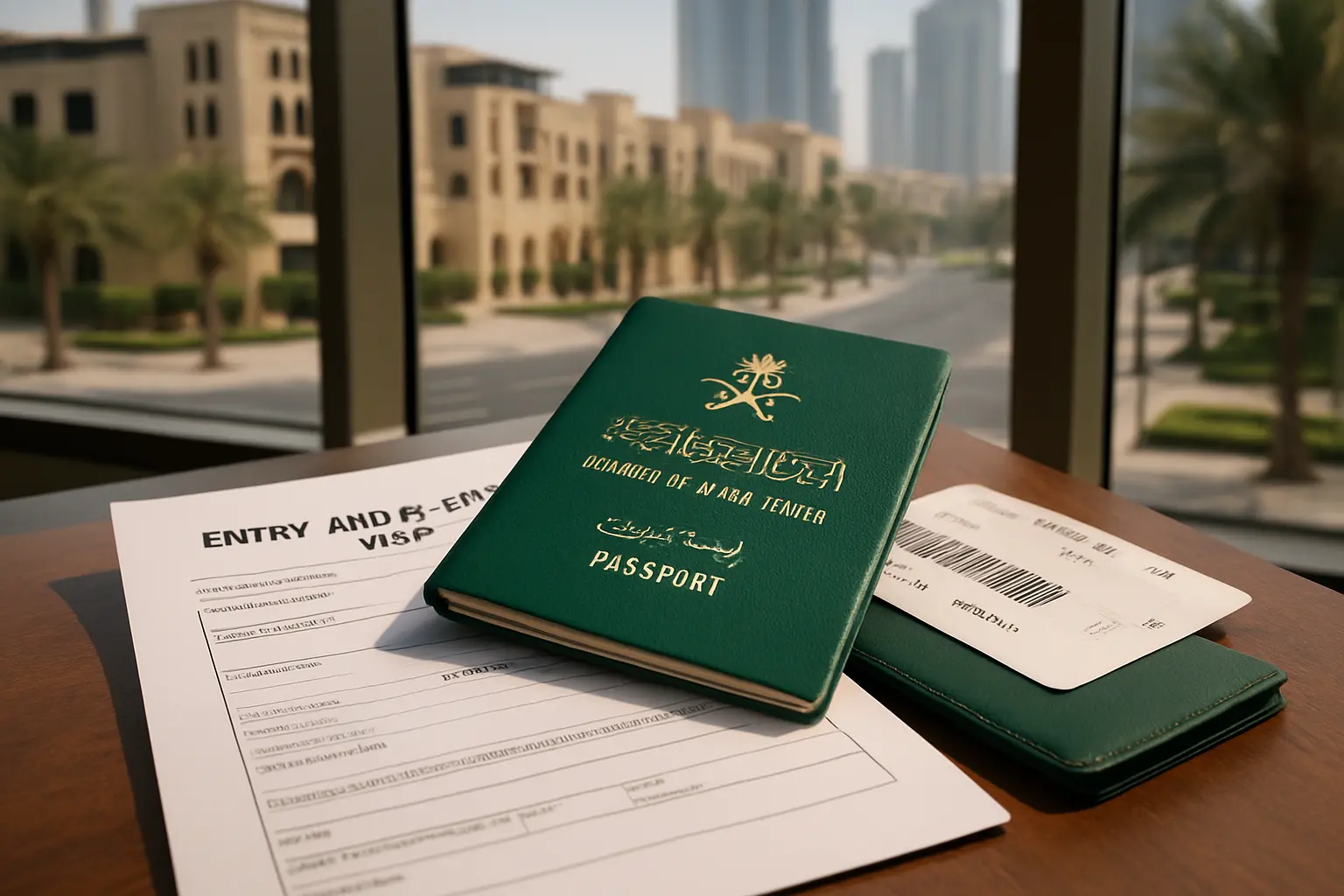
Saudi Arabia Exit and Re-Entry Visa Rules for Residents in 2026
Saudi residents who plan to travel outside the Kingdom generally need a valid exit and re-entry visa to leave and return while keeping their residency status. In 2026, residents should carefully check their Iqama, passport, visa validity and travel dates before departure, because an expired or incorrectly issued permit can create problems at the border.
This guide explains the main Saudi Arabia exit and re-entry visa rules for residents in 2026, including visa types, eligibility, fees, extensions and practical steps through Absher. Requirements may vary by individual circumstances, employer status and official policy updates, so applicants should verify the final details through the relevant government channels before travelling.
What is an exit and re-entry visa?
An exit and re-entry visa is the travel authorisation used by eligible Saudi residents who want to leave the Kingdom temporarily and return on the same residency. The permit is linked to the resident’s passport and Iqama and must remain valid for the intended return journey.
An Iqama by itself does not replace the exit and re-entry permit. Residents should confirm that the visa has been issued correctly before booking flights. Passport information, Iqama details and the permitted return date should all match the traveller’s documents.
Single and multiple exit and re-entry visas
Residents typically choose between a single-entry and a multiple-entry exit and re-entry visa.
- Single-entry visa: Suitable for one trip outside Saudi Arabia followed by one return to the Kingdom within the visa validity period.
- Multiple-entry visa: Suitable for residents who expect to travel internationally more than once during the authorised period.
- Final exit visa: This is different from an exit and re-entry visa. It is intended for permanent departure and normally ends the resident’s Saudi residency rather than preserving it for a return.
The most suitable option depends on the number of planned journeys, the resident’s employment or family circumstances and the validity of the Iqama. Selecting a longer or multiple-entry option does not remove the need to monitor the residence permit and passport expiry dates.
Key eligibility and document checks
Before applying, residents should review the following conditions:
- The Iqama should be valid for the required period and cover the intended return date.
- The passport should have sufficient validity. Current travel guidance indicates that residents requesting an exit or re-entry permit should have at least six months of passport validity.
- Any required government fees should be paid before the application is completed.
- The applicant’s records should not contain unresolved restrictions, violations or employer-related issues that prevent visa issuance.
- The resident should confirm that the employer or sponsor has completed any required approval or electronic process.
Family members and domestic workers may follow different service routes from employees. Sponsors should check the correct Absher service and make sure every traveller has an independently valid permit.
How to apply through Absher
Many exit and re-entry services are handled electronically through Absher. The exact menu names can change, but the general process involves signing in, opening passport or visa services, selecting the relevant exit and re-entry option, choosing the resident, entering the requested duration and confirming payment.
- Check the passport, Iqama and proposed travel dates.
- Log in to the appropriate Absher account.
- Open passport or visa services.
- Select the option to issue an exit and re-entry visa.
- Choose single or multiple entry and select the permitted duration.
- Review the resident’s details and return date carefully.
- Pay the applicable fee and save the confirmation.
Residents should keep a digital and printed copy of the visa details. Airlines and border authorities may rely on the electronic record, but having the confirmation available can help resolve discrepancies more quickly.
Exit and re-entry visa fees in 2026
Commonly published fee schedules list a single-entry exit and re-entry visa at SAR 200 for an initial period of up to two months, with additional monthly charges for longer validity. Multiple-entry visa fees are generally higher and vary according to the selected duration. Each eligible traveller is normally charged separately, including family members.
Because fees and service charges can change, applicants should rely on the amount displayed in the official payment process rather than an old calculator or an unofficial table. Payment should be completed before travel, and the transaction receipt should be retained for reference.
Extending an exit and re-entry visa
If a resident is unable to return before the visa expires, an extension may be possible, subject to the applicable conditions. Official Absher guidance states that an electronic extension service is available for certain sponsored persons who are outside Saudi Arabia, including family members and domestic workers. The person must be outside the Kingdom when the extension is requested, and the Iqama must meet the required validity conditions.
In some cases, the return date must be no later than seven days before the Iqama expires. The extension period may depend on the remaining validity of the original visa and can reach a maximum period specified by the service. The sponsor or authorised applicant should review the current Absher requirements before submitting the request.
Do not assume that an extension is automatic. Apply as early as possible, confirm payment and check that the new visa information appears correctly in the system. If an extension is unavailable, the resident may need guidance from the employer, sponsor or the relevant Saudi authority.
What happens if the visa expires?
Returning after an exit and re-entry visa has expired can lead to refusal of boarding or entry, administrative complications and possible effects on residency status. The consequences depend on the person’s circumstances, the visa category and applicable regulations. A resident should not wait until the final day to resolve an issue.
Before departure, set a reminder several weeks before the permitted return date. If plans change, contact the sponsor and check Absher promptly. Residents should also avoid relying solely on an airline booking because a ticket does not extend immigration permission.
Planning your move after sorting your paperwork
Visa compliance is only one part of relocating or managing life in the Gulf. Once travel documents are organised, residents can compare neighbourhoods, commute times and housing options using the Mena Homes area comparison tool. If purchasing property is part of the plan, the Mena Homes mortgage resource can help residents explore financing considerations before making a decision.
Final checklist for Saudi residents
- Confirm the passport has adequate validity.
- Check that the Iqama remains valid beyond the planned return.
- Choose single or multiple entry based on the actual travel schedule.
- Review the visa details in Absher after payment.
- Keep confirmation records accessible while travelling.
- Apply for an extension early if circumstances change.
- Ask the sponsor or employer to resolve any blocked or inaccurate record.
- Verify official requirements again before departure.
Already sorted the paperwork? Find your next home on Mena Homes