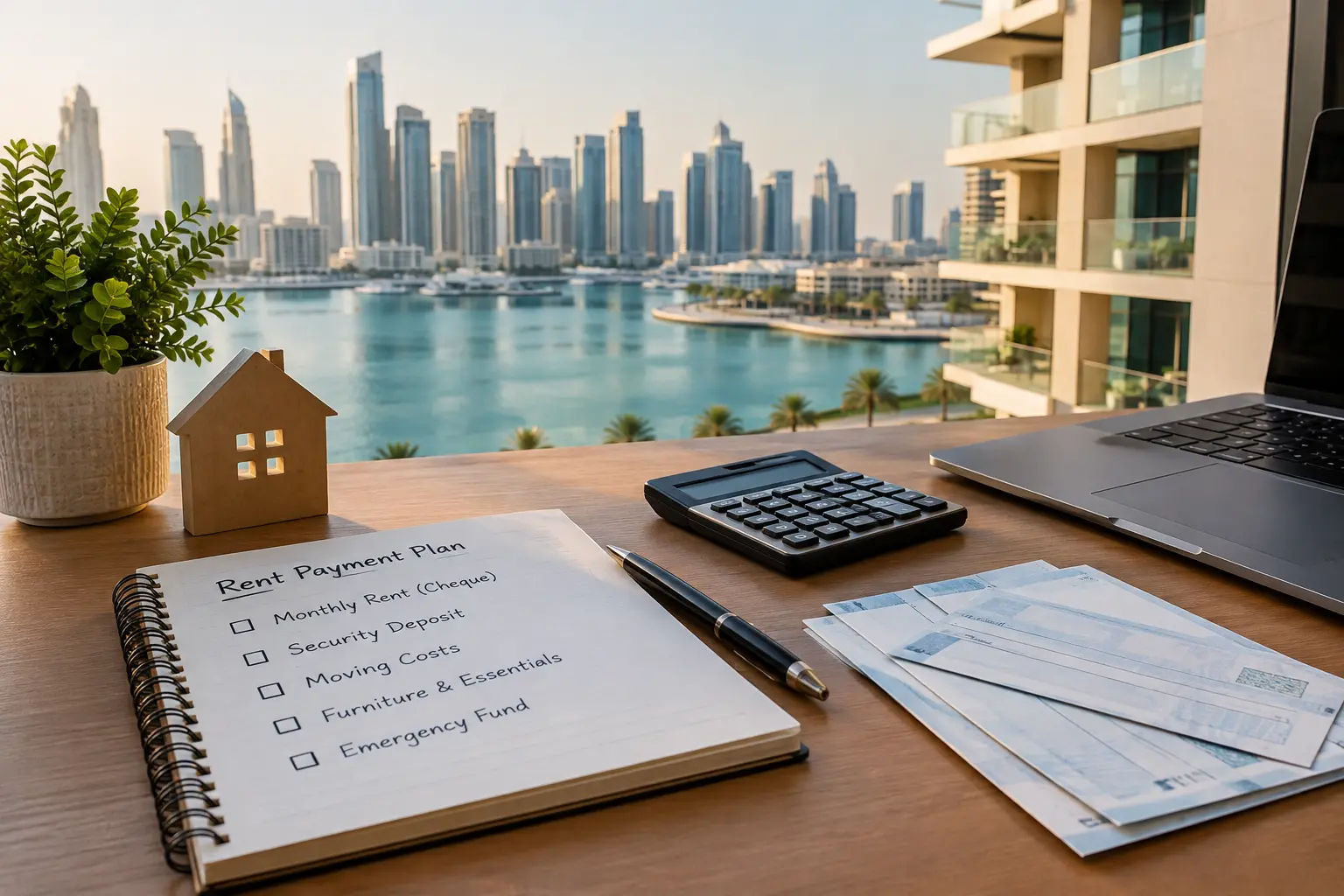
Dubai Rent Payment Planning: How to Budget for Cheques and Moving Costs
Renting a home in Dubai involves more than choosing an annual rental figure. Tenants may need to prepare rent cheques, a security deposit, agency commission, Ejari registration, utility deposits and moving expenses within a short period. A realistic cash-flow plan helps you avoid last-minute borrowing and makes it easier to compare homes based on their true cost.
This guide explains how to organise Dubai rent payment planning, estimate the money required before moving in and manage expenses throughout the tenancy.
Start with the annual rent and cheque schedule
The first figure to record is the agreed annual rent. In Dubai, the landlord and tenant usually agree on the number and dates of rent payments in the tenancy contract. Post-dated cheques can be provided according to the dates agreed in the contract, so confirm the schedule before signing and keep copies of cheques or bank-transfer receipts.
A property advertised at AED 96,000 per year may require one cheque for the full amount, four cheques of AED 24,000, or another schedule agreed by both parties. The total annual rent remains AED 96,000, but the payment frequency changes the amount of cash you need immediately. More cheques can make monthly cash flow easier, although the landlord or agent may apply different terms.
Create a payment calendar showing:
- The date each rent cheque is due.
- The amount of every instalment.
- The bank account that will fund the payment.
- A reminder at least several weeks before each due date.
- Any agreed fees for changing payment arrangements.
Keep enough money available before every due date. A missed or returned payment can lead to additional costs, disputes and legal complications, so do not treat the cheque date as the date to begin arranging funds.
Calculate the upfront rental costs
Use a separate worksheet for the expenses due when you sign the tenancy contract. The common categories are the first rent payment, security deposit, agency commission, Ejari registration and utility connection costs.
Security deposit
A security deposit is commonly calculated as about 5% of annual rent for an unfurnished property and around 10% for a furnished property, although the exact amount should be confirmed in the contract. For an unfurnished home with annual rent of AED 96,000, a 5% estimate would be AED 4,800. Treat this as temporarily unavailable cash because it may only be returned after the tenancy ends, subject to the property's condition and outstanding obligations.
Agency commission
Many tenants should also budget for agency commission, often around 5% of annual rent plus applicable VAT. On AED 96,000 annual rent, 5% would be AED 4,800 before VAT. Ask for a written breakdown of the commission, VAT and any administration charges before agreeing to proceed.
Ejari and administration costs
Ejari registration formalises the tenancy record. The exact amount can vary depending on the registration channel and service provider, so include a modest administration allowance in your upfront budget. Request receipts for all payments and retain the signed tenancy contract with your other housing documents.
Utilities and connection deposits
Moving into a new home may require utility deposits, activation charges, internet installation and other service fees. Deposit amounts can differ between apartments and villas. Confirm the required payments with the relevant providers and building management rather than relying on an informal estimate.
Build a moving-cost allowance
Moving expenses can be easy to underestimate because they are spread across several suppliers. Request at least two quotations for movers and ask whether packing materials, dismantling, assembly, stairs, parking and weekend access are included.
Your moving budget may include:
- Professional movers and packing materials.
- Furniture assembly or disassembly.
- Deep cleaning before or after the move.
- Replacement keys, access cards or building permits.
- Internet installation and router charges.
- Initial groceries, household supplies and basic maintenance items.
- Curtains, lighting, appliances or furniture not included with the property.
- Temporary storage if the move-in dates do not align.
Set aside a contingency amount for unexpected expenses. Even a carefully planned move may involve a delivery surcharge, a repair, a replacement item or a delayed handover.
Use a simple cash-flow formula
Estimate your move-in cash requirement with this formula:
Move-in cash required = first rent instalment + security deposit + agency commission and VAT + Ejari and administration fees + utility deposits + moving and setup costs.
For example, a tenant renting an unfurnished property for AED 96,000 annually on four cheques might plan for AED 24,000 as the first rent instalment, AED 4,800 for a 5% security deposit, approximately AED 4,800 for a 5% agency commission before VAT, plus registration, utilities and moving costs. This example is only a planning illustration; confirm the actual figures in writing before signing.
After calculating the move-in amount, review the remaining three rent cheques. Divide each instalment by the number of months between payments and save that amount regularly. If each future cheque is AED 24,000 and is due every three months, saving AED 8,000 per month creates a dedicated rent reserve before the next payment date.
Compare homes by total affordability
The cheapest annual rent is not always the most affordable option. A lower-priced home farther from work may increase transport costs, while a property with a higher rent could reduce commuting expenses or include appliances and maintenance benefits. Use Mena Homes' area comparison tool to review locations and consider rent alongside commute, amenities and everyday spending.
Also compare the payment schedule. Two homes with similar annual rents can require very different amounts on signing if one landlord requests a single cheque and the other accepts multiple instalments. Evaluate both the total annual cost and the timing of payments.
Keep renting and buying decisions separate
Rent payment planning is also useful when considering whether buying could suit your long-term finances. A mortgage introduces a different set of costs, including a down payment, bank fees, valuation, registration and ongoing ownership expenses. Mena Homes provides mortgage information to help prospective buyers understand the process.
Do not compare rent with a mortgage instalment alone. Include service charges, insurance, maintenance, transaction costs and the opportunity cost of the down payment. A mortgage affordability estimate can help you test different property prices and repayment assumptions before speaking with a lender.
Final checklist before signing
- Confirm the annual rent and every cheque amount.
- Record all payment due dates in a calendar.
- Ask whether the security deposit is refundable and document the handover condition.
- Obtain a written agency commission and VAT breakdown.
- Confirm Ejari, utility and building access charges.
- Check moving access rules, lift bookings and parking requirements.
- Keep copies of the contract, receipts, cheques and inspection photographs.
- Maintain an emergency reserve after paying the move-in costs.
Good Dubai rent payment planning turns a large, stressful payment into a manageable schedule. By separating rent cheques from one-off costs, estimating deposits accurately and allowing for moving expenses, you can choose a home that fits both your lifestyle and your cash flow.
Estimate your home loan with our Mortgage / Affordability Calculator