How to Compare Total Ownership Costs for Apartments in Abu Dhabi
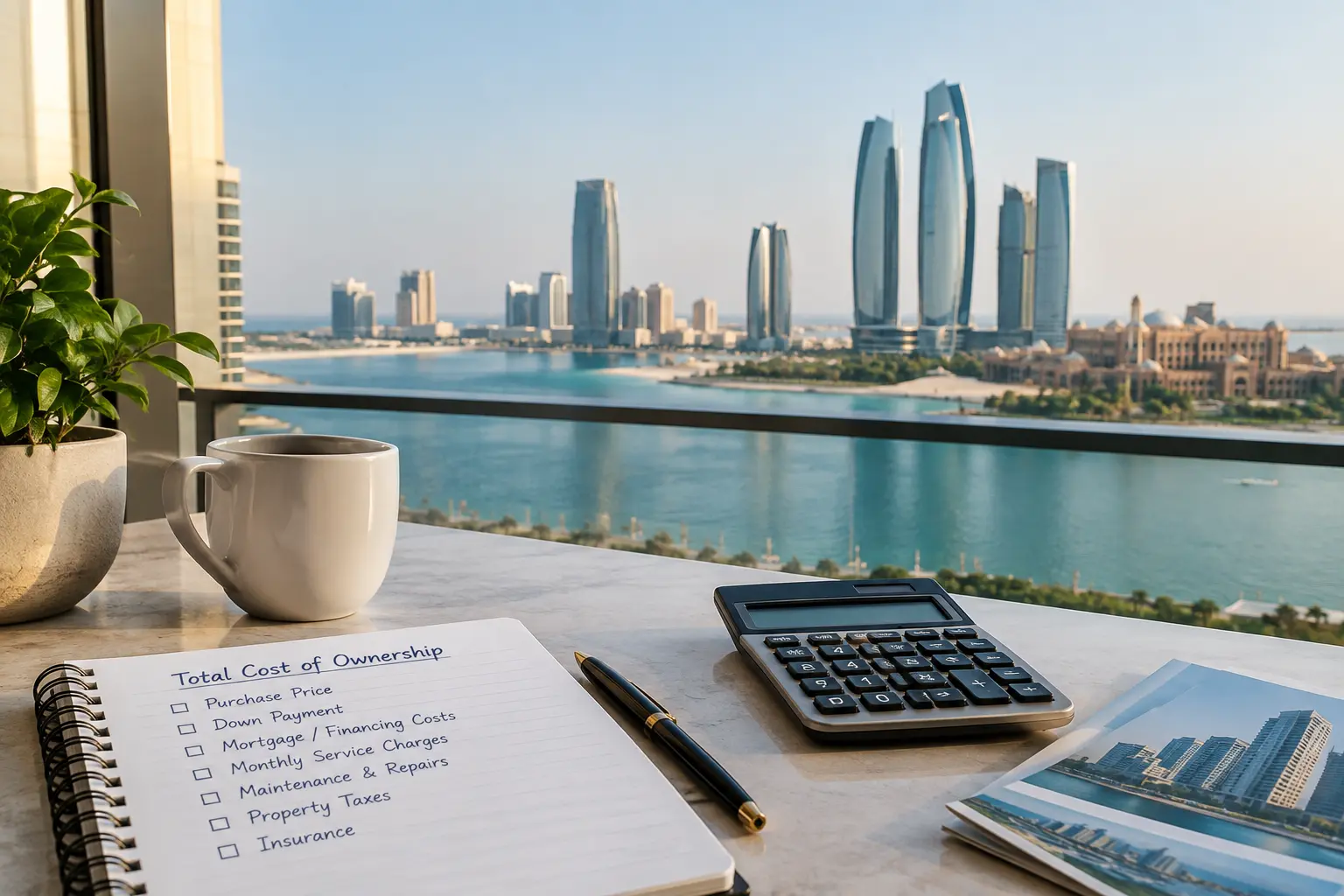
Comparing apartments in Abu Dhabi based only on their advertised prices can lead to an incomplete financial picture. The true cost of ownership includes the purchase price, upfront transaction fees, mortgage expenses, recurring service charges, maintenance, insurance, utilities and potential resale costs.
A structured comparison helps buyers understand which property best fits their budget and long-term goals. Whether you are purchasing a home or evaluating an investment, the following framework can help you calculate the total cost of owning an apartment in Abu Dhabi.
Start with the complete purchase price
The advertised price is the starting point, not the final amount required to buy. Before comparing two apartments, record the full purchase price of each property and confirm whether the price includes parking spaces, storage areas, furniture or other extras.
For off-plan properties, review the payment schedule carefully. A developer may require instalments linked to construction milestones, while a completed property may require a larger payment at transfer. The timing of payments affects how much cash you need and whether you will incur interim financing costs.
It is also useful to compare the price per square metre, but this measure should not be used alone. A lower price per square metre may reflect an older building, a less central location, smaller facilities or higher future maintenance requirements.
Calculate upfront transaction costs
Upfront costs can materially change the amount needed at completion. Depending on the transaction, buyers may need to budget for registration or transfer charges, brokerage commission, conveyancing, developer administration charges, title-related expenses and a no-objection certificate.
Property registration charges should be confirmed through the relevant Abu Dhabi authority and transaction documentation. Market guidance commonly cites a transfer or registration charge around 2% of the property value, although the exact amount and responsibility for payment can vary by transaction. Brokerage commission is also commonly around 2% when an agent is involved, with VAT potentially applying to professional services.
Do not assume that all fees are included in the quoted property price. Ask the seller, developer, broker and conveyancer for a written breakdown of every expected payment. For area-level research, use Mena Homes’ Abu Dhabi area comparison tool to assess location factors alongside the financial figures.
Include the cash contribution and mortgage costs
For a financed purchase, the down payment is usually the largest upfront cash requirement. Compare the required contribution for each apartment and keep a separate reserve for fees, furnishing, moving expenses and emergencies.
Mortgage costs extend beyond the monthly instalment. They can include a bank arrangement fee, property valuation, mortgage registration, life or property insurance and other lender charges. Some lenders calculate arrangement fees as a percentage of the loan amount, so a higher-priced apartment can produce substantially higher financing costs even when the interest rate is similar.
Compare mortgage offers using the total repayment amount, not just the advertised rate. Review whether the rate is fixed, variable or linked to a changing benchmark, and check the terms for early settlement, refinancing and missed payments. Mena Homes’ mortgage information resource can help buyers understand the main financing considerations before requesting formal offers from lenders.
Compare monthly ownership costs
Monthly ownership costs should be calculated for each apartment using realistic assumptions. The main items may include:
- Mortgage principal and interest
- Building service charges
- Utilities and cooling
- Home or contents insurance
- Parking and access fees
- Routine repairs and replacement costs
- Property management fees if the apartment is rented out
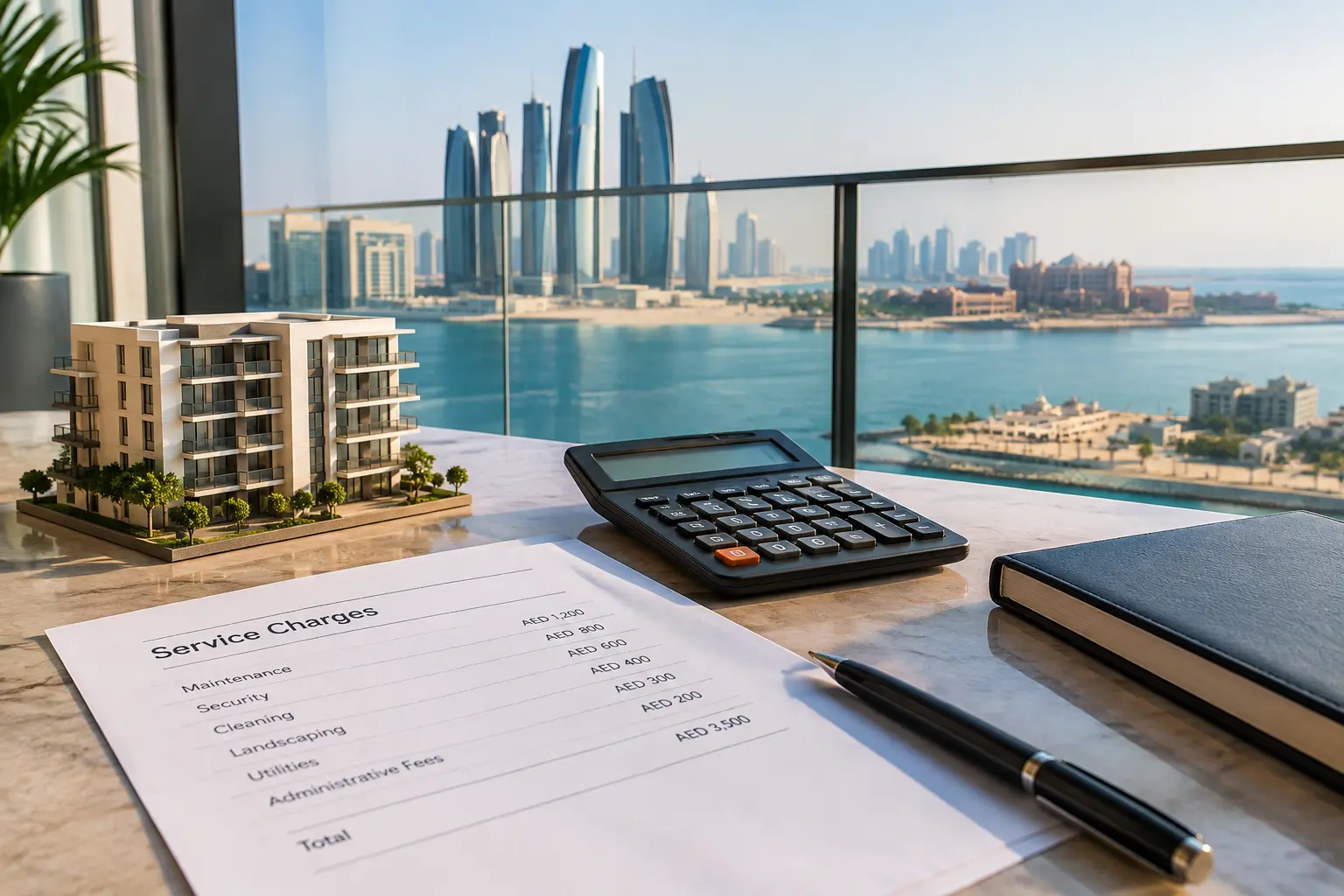
Service charges are particularly important in Abu Dhabi apartment buildings. They support shared facilities and common-area operations, but they vary according to the building, location, amenities, unit size and management arrangements. A tower with pools, gyms, concierge services and extensive communal areas may have higher annual charges than a simpler building.
Request the latest service-charge statement and ask whether any major works, special assessments or planned increases are expected. A low purchase price may be less attractive if the building has unusually high recurring charges or requires significant capital repairs.
Budget for maintenance and replacement
Even when a building provides professional facilities management, owners remain responsible for costs inside their apartment. Air-conditioning equipment, appliances, plumbing fixtures, flooring, paintwork and kitchen fittings eventually require repair or replacement.
Set aside a yearly maintenance reserve rather than waiting for an expense to occur. The appropriate amount depends on the apartment’s age, condition, size and quality of finishes. Newer properties may have lower immediate repair needs, while older apartments can offer a lower purchase price but require more frequent spending.
Inspect the apartment carefully before committing. Check moisture, air-conditioning performance, windows, plumbing, electrical systems, appliances and built-in wardrobes. If possible, arrange an independent inspection so that defects can be identified before completion.
Account for location and lifestyle costs
Location affects ownership costs in ways that may not appear in the purchase contract. Compare commuting time, parking requirements, school access, public transport, nearby services and expected rental demand.
An apartment farther from employment centres may have a lower price but create higher transport costs and longer travel times. A centrally located property may cost more initially while reducing commuting expenses and improving convenience. For investors, location can also influence vacancy periods, tenant demand and achievable rent.
When comparing neighbourhoods, assess the building and the surrounding area together. A well-priced apartment in a less established location should be evaluated against infrastructure plans, nearby development, traffic conditions and the availability of retail and community facilities.
Estimate the total cost over your holding period
Choose a realistic ownership period, such as five, seven or ten years, and calculate the expected cost for that period. Add the initial cash contribution, purchase fees, mortgage payments, service charges, maintenance reserves, insurance and other recurring costs.
If the property is an investment, subtract expected rental income after allowing for vacancy, maintenance, management, furnishing and leasing expenses. Avoid relying on the gross rental figure alone because the net return provides a more useful comparison.
You should also estimate the likely selling costs at the end of the holding period. These may include brokerage, conveyancing, outstanding mortgage settlement and repairs or upgrades needed before sale. A property with a lower initial price is not necessarily the cheapest to own if it has high annual charges or limited resale demand.
Use a consistent comparison worksheet
For each apartment, create the same set of calculations. Include the purchase price, down payment, transaction fees, loan amount, monthly mortgage payment, annual service charges, estimated maintenance, insurance, utilities and expected resale value.
Then test different scenarios. Consider what happens if the mortgage rate rises, service charges increase, rental income is lower than expected or the property takes longer to sell. Stress testing reveals whether the purchase remains affordable when conditions change.
Keep personal affordability separate from investment performance. A property may produce attractive rental income but still be unsuitable if the monthly payment leaves too little room in your household budget. Conversely, a home may provide lifestyle value that is not fully captured by a rental-yield calculation.
Final checklist before choosing an apartment
- Confirm the full purchase price and payment schedule.
- Obtain a written estimate of transfer, registration and professional fees.
- Compare mortgage rates, total repayment and lender charges.
- Review the latest service-charge statement.
- Inspect the apartment and building condition.
- Estimate utilities, insurance and annual maintenance.
- Assess transport, amenities and future location demand.
- Model resale, rental and interest-rate scenarios.
- Keep an emergency reserve after completion.
The best apartment is not always the one with the lowest asking price. It is the property whose total ownership cost matches your cash flow, risk tolerance and long-term plans. A complete comparison gives you a clearer basis for negotiating and helps prevent unexpected expenses after purchase.
Estimate your home loan with our Mortgage / Affordability Calculator